But as Codex and Claude Code kept improving, I started to rethink where I wanted to do my work and what I needed each agent to do.
I found that Codex was just as capable as my OpenClaw agents for a lot of the work I was doing. Running it locally also meant I could interject, see what was happening in the browser and let it take control when that was useful. It felt like a cleaner OpenClaw experience.
So I took a step back and reevaluated my entire agentic ecosystem. OpenClaw is still part of it, but I've changed how I use it. I also rebuilt my personal agent Wren from scratch and spent a lot of time organizing the information he has access to.
Where everything runs
My setup now has three layers. My OpenClaw agents still run on a VPS and manage a lot of the public-facing experiences I have out in the world. Some have specific jobs, including managing websites for me.
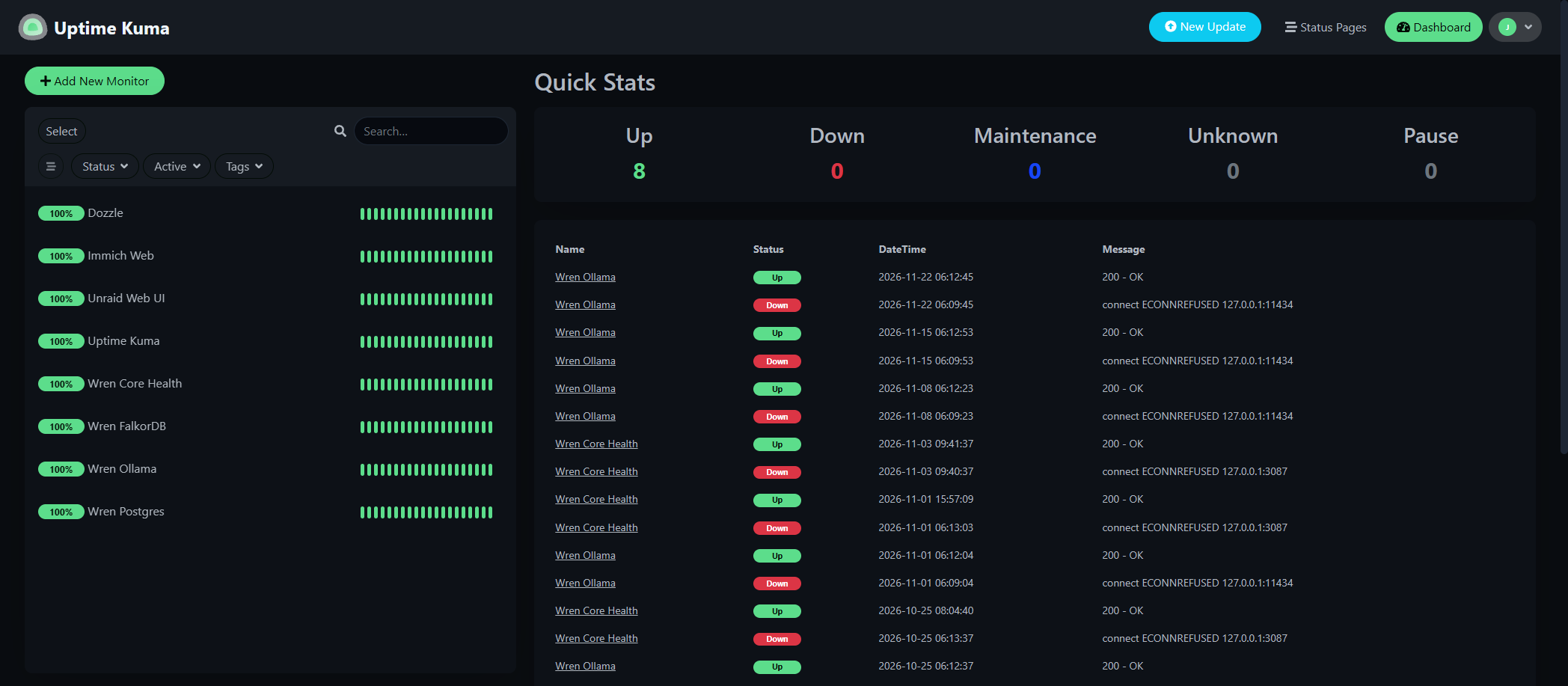
My home lab is primarily for private projects. I run containers there and access them over Tailscale, whether I'm at home or somewhere else. One example is Uptime Kuma, which I use to monitor services on the home lab. It's also where the new version of Wren runs.
Then there's my local PC, where I use Codex and Claude for most of the heavy lifting and building. I can work alongside them, see what they're doing and jump in as needed.
I've been working on connecting those layers so I can use the right agent for the work and get context from another part of the setup when I need it. That's where rebuilding Wren came in.
Rebuilding Wren
The original Wren was an OpenClaw agent on my VPS. That agent still exists, but I'm not using it anymore. I'm still figuring out whether it needs to exist at all.
The Wren I use now is a separate, custom rebuild running on my home lab. I built him from scratch on top of the Pi agent harness and migrated the original Wren's memories into the new workspace. I didn't carry over a ton of what the old agent used to do. Instead, I took the opportunity to go through that information and organize it properly.
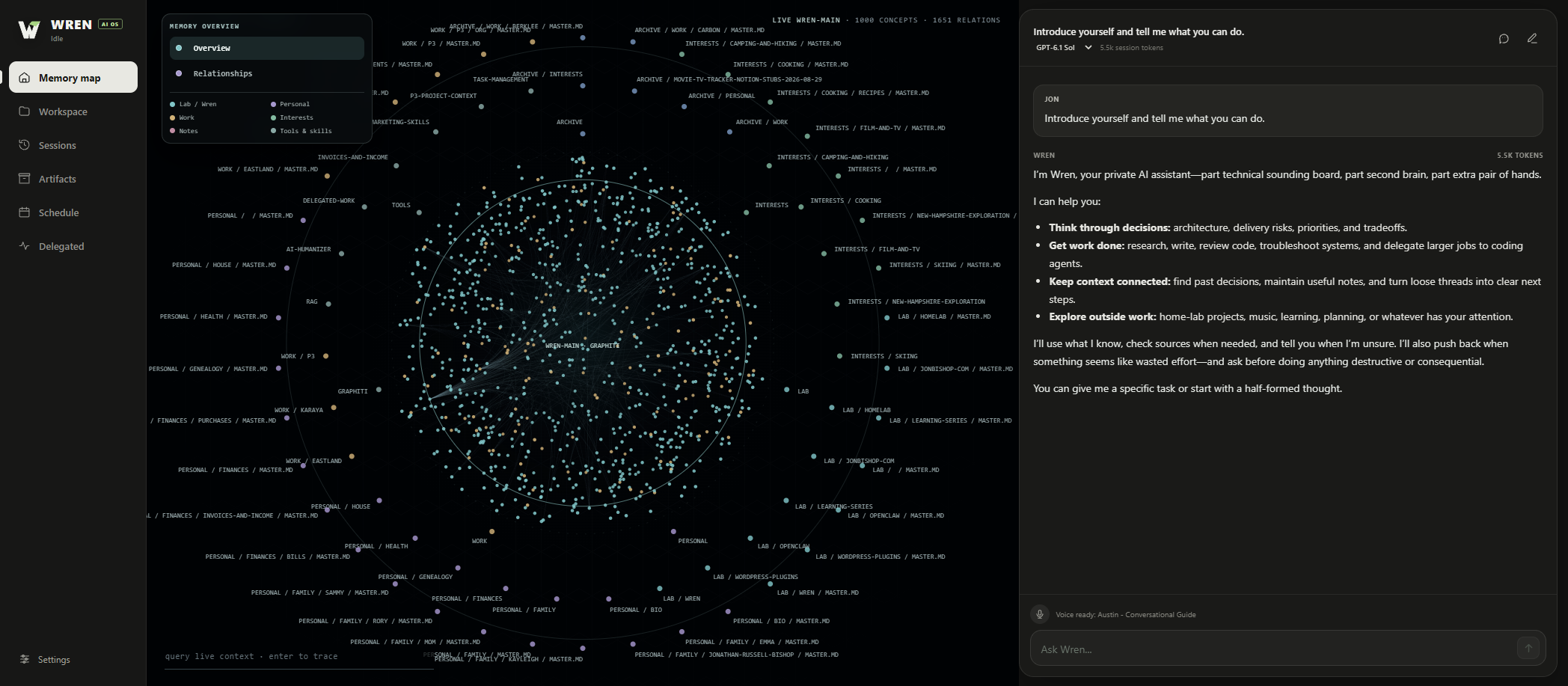
If anything, Wren knows more now because I took the time to get everything in order. That has been a big part of the rebuild.
Getting the workspace organized
Everything in Wren's workspace fits into one of four high-level folders for personal, work, lab and interests. Within each one, I've set up a more specific hierarchy and nesting structure for the information that belongs there.
I'm interested in building a rich custom memory layer, and there are tons of ways to approach memory retrieval. But I've been focused first on the workspace architecture itself. Having a clear place for the information gives me something I can organize and work with, and it gives Wren a better foundation to search.
The workspace feeds into my RAG system and Graphiti. RAG, or retrieval-augmented generation, helps find relevant information to bring into a conversation. Graphiti gives Wren another way to work with relationships in that information. He can search both, along with past sessions and the current conversation. He can also use tools like grep to search files on the server directly.
The vault is an SMB share on my network, and Wren can access other shares on the home lab too. I can put paperwork in my paperwork folder or pull GitHub repositories into my work in lab share. Wren can work with those same folders, make changes and push work up to GitHub.
Connecting the agents
I also gave the new Wren the ability to delegate to my other agents. He can reach the OpenClaw agents on my VPS as well as Codex and Claude on my PC. If he's missing context on the home lab, he can reach out and get what he needs. He can also hand work to an agent that already manages something specific.
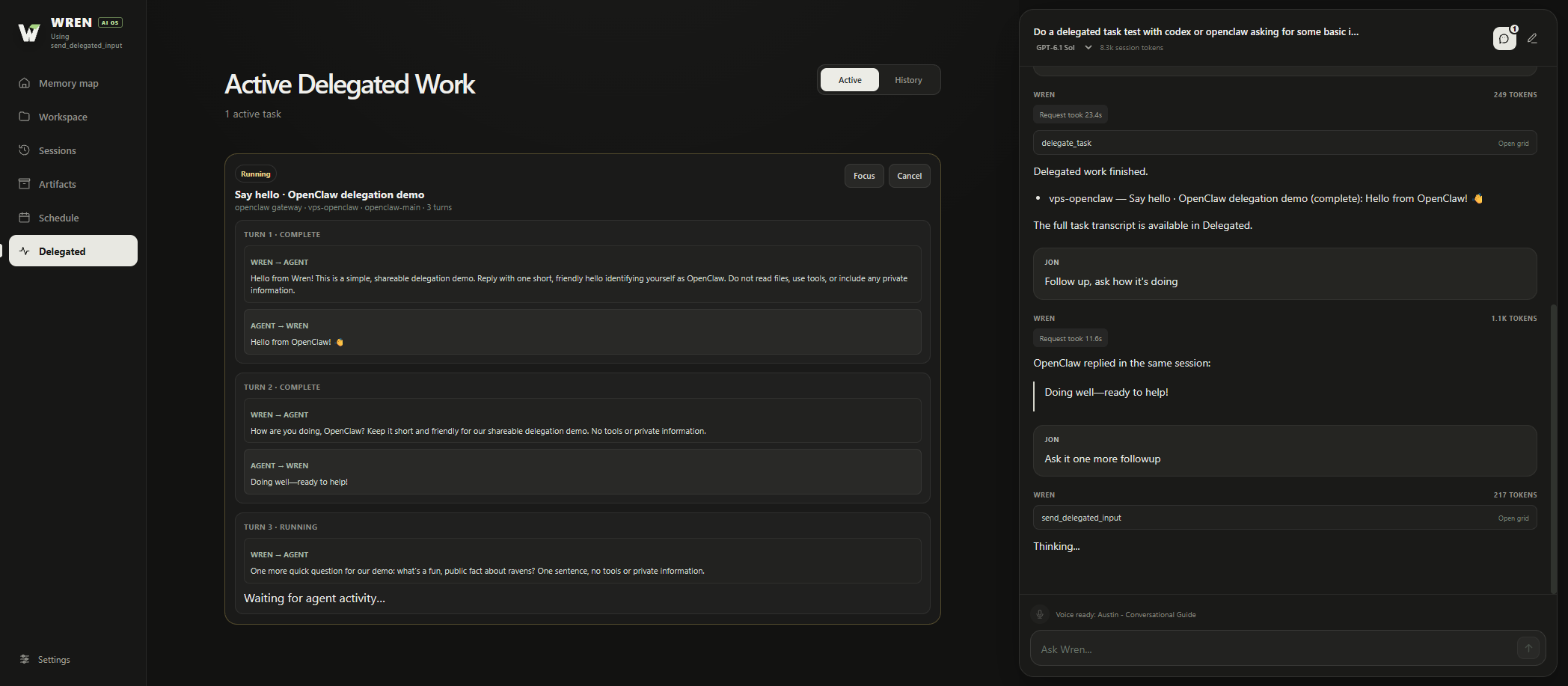
For example, if I want a website update, Wren can give instructions to the agent responsible for that site. I can also manage most of those same sites locally with Codex. The sites have instructions for how agents should work with them, including making sure they're pulling from main.
A lot of those sites and experiences use GitHub Actions for automatic deployment, so the agent primarily interacts with GitHub. At this point, I'm also not too afraid to give an agent SSH access to a server. It's been super helpful for fixing bugs, addressing security issues, cleaning things up and orchestrating work in general.
What's next
For now, the OpenClaw VPS handles a lot of my public-facing projects, the home lab is primarily for private experiences and my PC is where I do most of the building. They're all working together pretty well, and I'm happy my OpenClaw agents are still around while I figure out what I want each part of the setup to do.
My next home lab addition will be more processing power so I can separate the containers from storage. That might change Wren a bit more too.
But give it a few months. We'll see what happens.